
The International Phonetic Alphabet, or IPA, is a phonetic notation system of standardized speech sounds. It is used to transcribe the pronunciation of spoken words. The symbols that make up IPA represent every existing sound in all oral language.
It was developed in 1886 and is occasionally updated by the International Phonetic Association. One aim of the IPA was to create a unique symbol for every distinctive sound in spoken language. A standardized system means that it can be used across all languages and cultures. The consistency provided by the IPA allows for speech sounds to be described clearly, since the pronunciation of written words can vary widely between different languages.
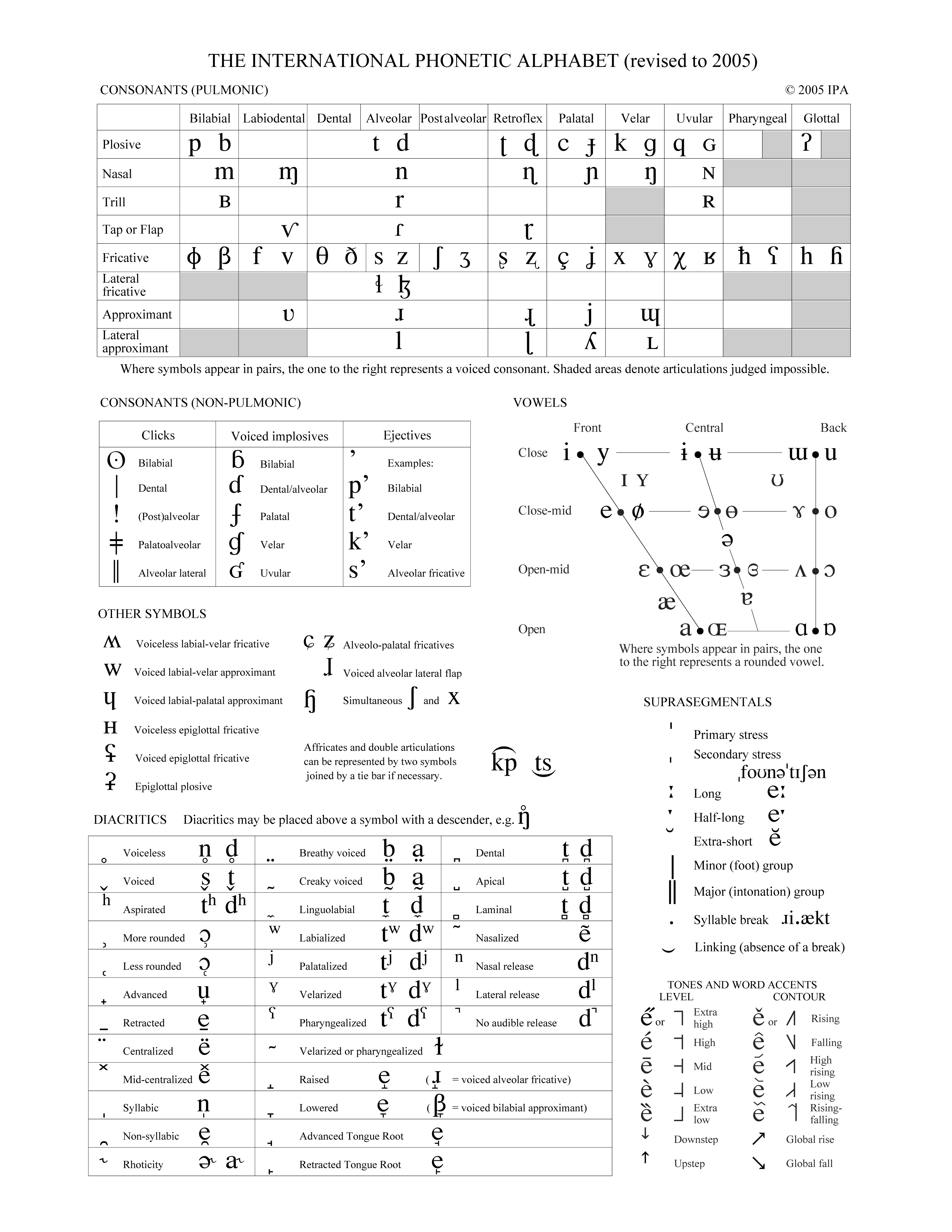
The IPA is largely based on the Latin alphabet but also includes Greek and other non-Latin characters. It has 107 letters, 52 diacritics, and four prosodic marks. The letters represent consonant and vowel sounds. Diacritics are modifying symbols added to letters that indicate fine distinctions. Prosodic marks show qualities like stress, intonation, and rhythm.
On the IPA chart, consonants are arranged in a table with rows that show the manner of articulation (how it is produced) and columns that show place of articulation (where in the vocal tract it is produced). Vowels are arranged by the position of the tongue.
Below is the IPA chart from the International Phonetic Association.
 MACAW Lab
Leave a comment