
Words do not exist independently in our minds—they connect to other words in meaningful ways. In linguistics, a semantic network is a map of how words relate to each other conceptually. This network has points and lines that connect these points. The points are words, and the lines show how any given word meaning relates to another. Take this simplified semantic network, for example:
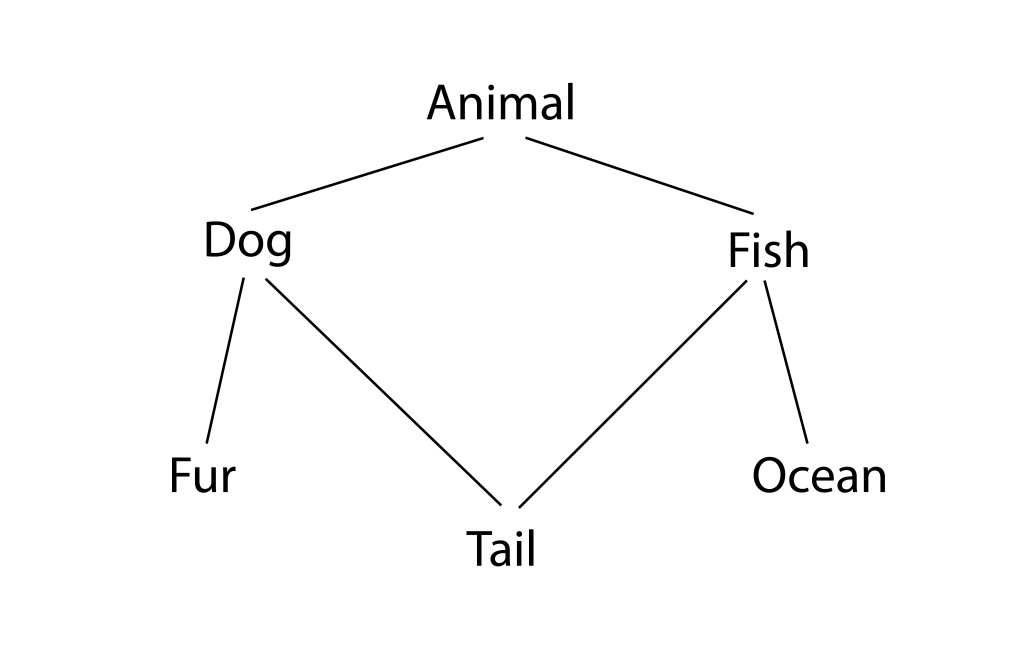
When it comes to language development, the semantic network plays an important role. Part of learning a word involves mapping it onto the semantic network—connecting it to other words. Using our example, when a child learns the word ocean, they will connect it to the word fish, but not the word dog. It is easier to learn words that relate to the existing network than words that do not. The organized structure of a semantic network also helps with language processing and language expression in children and adults. Being able to connect words to each other via their meanings allows us to efficiently understand and produce language.
To explore semantic relatedness in English words, check out WordNet from Princeton University. For a visual model of this database, check out WordVis developed by Steven Vercruysse at NTNU university in Norway. Wordbank from Stanford University allows you to browse a child’s typical semantic network at different stages of development, from six months to three years.
 MACAW Lab
Leave a comment